
-
universitylibrarian@uni-mysore.ac.in -
Call Now
0821-2419388
University of Mysore is one of the oldest prestigious and foremost centre of higher education in the Country. The motto of the University, as engraved on its emblem “Nothing is Equal to Knowledge” (ನಹಿ ಜ್ಞಾನೇನ ಸದೃಶಂ) and “I always uphold the Truth”. The University was established on 27th Ju1y,1916 by its founding father His Highness Nalvadi Krishnaraja Wodeyar - IV the then Maharaja of Mysore and Sir. M. Vishweswariah the then Dewan of Mysore. University of Mysore was the 6th University established in the Country and the very pioneer in the Princely State of Mysore. The present jurisdiction of the University covers 4 districts viz., Mysore, Hassan, Mandya and Chamaraja Nagar. Mysore University Library
Mysore University library is one of the oldest and largest University Libraries in the country and Mother of other University Libraries in Karnataka.The library started functioning in the year 1918. It has a glorious record of more than 105 years of worthy service with resource collection 1.2 million items in its systems today. The inception collection of the library was around 2311 books which was housed in Jubilee building and later moved to Maharaja’s college campus and finally the library shifted to new building at Manasagangotri Campus in 1965. Foundation stone of this functional building was laid by first UGC Chairman Prof. C.D. Deshmukh on 11th July, 1960. It was inaugurated by the then President of India Dr. Sarvapalli Radhakrishnan on 7th December, 1965.
The library is extending both traditional and IT related services. It has 16 different divisions/ Sections carrying out various library professional activities.
01. Acquisition Section
02. Technical Section
03. Stack
a) Stack Unit 1
b) Stack Unit- 2
4. Circulation/ Membership Registration Section
5. Reference, Documentation and Archival Section
6. Periodical Section
7. Kannada Section
8. Digital Information Resource Centre
9. Plagiarism Check Service:
10. INFLIBNET Corner:
11. Career Information Resource Centre:
12. Learning Resource Centre for Visually Challenged
13. Manasa Media Centre:
14. Text Book Loan Section
15. Library Office
16. OPAC and Virtual Zone
17. Photostat Copy (Xerox Unit)
This section is responsible for collection development and the procurement of new print books, based on recommendations submitted by students, research scholars, and faculty members. All recommendations must be duly attested by the chairperson of the respective department. Users can also access information regarding the status of new arrivals in the library.
This section is responsible for key professional activities, including classification, cataloguing, indexing, and the physical processing of books. The library currently employs the 23rd edition of the Dewey Decimal Classification (DDC) system for classification and follows AACR II (Anglo-American Cataloguing Rules, Second Edition) for cataloguing practices. Additionally, the section compiles a New Arrival List (NAL) of newly acquired books, which is regularly shared with the chairpersons of the respective departments.
The library's main collection is organized across various Stack Areas, which are further divided into two units: the Unit-1 (1-4 Floors) and Unit- 2 Primarily houses older volumes. This section is frequently accessed by users from the Social Sciences, Humanities, and language and Literature, Science and Technology, Foreign Language-related disciplines.
In this section all the newly acquired Textbooks and Reference books are available only for reference within the Library by the users.
This section acts as the primary interface between the library and its users, facilitating efficient access to resources and ensuring adherence to borrowing policies.
The Circulation / Membership Registration Section in a university library plays a vital role in managing user access and the lending of library materials. Its primary responsibilities typically include:
• Membership Registration: Enrolling new users (students, faculty, staff, and sometimes external members) into the library system, issuing library cards or membership IDs, and maintaining accurate records of registered users.
• Circulation Services: Managing the lending and return of library books. This includes issuing, renewing, reserving, and recalling items as per library policies.
• Maintaining User Records: Keeping track of borrowing histories, overdue items, fines, and penalties to ensure smooth operation and accountability.
• Providing User Assistance: Helping members with circulation-related queries, guiding them on borrowing rules, and assisting with reservations or renewals.
• Providing Induction Programmes: A library induction programme is a process designed to introduce new users, such as students, to a library's resources, services, and policies. These programs typically involve guided tours, an overview of collections (both print and digital), and training on how to use the online catalog, databases, and other electronic resources. The goal is to build user confidence and familiarity, ensure awareness of rules, and equip users with the skills to find and use information effectively.
• Inventory Control: Monitoring and updating the status of library materials in circulation to prevent loss and maintain collection integrity.
• Inter Library Loan: This Section also provides Inter Library Loan facility as per the request made by concerned users
o Teaching faculty: Professor, Reader, Lecturer,
o Research Scholars: UGC / CSIR / JRF / Part time / Full Time / FIP and Private
o Non-teaching staff
o Students : Local, Foreign
o Visitors (Issues Visiting Cards as ID for reference only) : Local / Regional / National / International
This section is a highly significant and frequently consulted area by users. It houses an important collection that includes dictionaries, encyclopedias, theses and dissertations, reports from various committees and commissions, annual reports, gazetteers, census reports, maps, atlases, charts, general knowledge books, reference materials, and abstracting journals.
A distinctive feature of this section is its rare and archival collection of historically important documents related to the princely state of Mysore. Notable holdings include records from the British Empire and reports from the Archaeological Survey of India.
Additionally, the section contains special collections dedicated to prominent national leaders such as Mahatma Gandhi, Dr. B.R. Ambedkar, and Subhash Chandra Bose. It also includes resources like rare paintings, encyclopedias on Nobel laureates, tribes and tribals, caste and tribes and the land and people of Indian states, along with a human rights collection.
Key regional collections include the Karnataka State Gazetteers (District Gazetteers), Mysore Representative Assembly Reports (MAR), Epigraphy Indica, Epigraphy Carnatica, Karnataka Inscriptions, Art and Architecture, United Nations reports, World Bank reports, Constituent Assembly reports, Lok Sabha debates, the Tippu Sultan Collection, and Mysore History Collection.
The Library Organize the following Book Exhibitions:
1.Nethaji Subhash Chandra Bose Jayanthi
2.Republic Day
3.Women’s Day
4.Life and messages of Swami Vivekananda
5.Dr. B.R.Ambedkar Jayanthi
6.World Book Copyright Day
7.Independence Day
8.Teachers Day
9.Gandhi Jayanthi
10.Kannada Rajyotsava
11.National Book Week
12.Dr. S.R.Ranganathan, (Father of Library Science) Birthday.
This section is a vital component of the library, currently subscribing to approximately 99 Indian journals based on specific recommendations from the Chairpersons of the postgraduate departments. Since the library's inception, the total number of journal titles held exceeds 1,26,000. The collection includes key reference-oriented journals and magazines, with a distinctive feature being the comprehensive archive of Gazette, ranging from the princely State of Mysore to the present day.
Currently, the section subscribes to 31 general magazines and 18 prominent national and local newspapers. Additionally, it maintains systematically filed archives of newspapers for up to one year. Back issues of journals are temporarily bound and organized on subject-specific shelves. The section has also initiated a newspaper clipping service. Notably, it houses archival issues of leading international newspapers such as The New York Times, The Washington Post, and The Times Literary Supplement.
This section houses books published in the Kannada language, with a total collection of approximately 75,000 volumes. It also features literature authored by and about Jnanpith Award recipients, as well as Festschrift volumes dedicated to eminent personalities. Notable collections within this section include the Kannada World Encyclopedia, Prabuddha Karnataka, Epigraphy of Karnataka in Kannada, and Kannada Grantha Soochi.
a. Internet Centre :
DIRC consists 370 desktops with Internet service availed by the Faculty, Researcher Scholars, and Students. There is a steady increase in the number of users. The service of the Internet is available between 9 a.m. to 7.30 p.m.
b. Electronic Information Resources:
The MUL provides access to 7026 e-journals of 10 publishers, J-Gate Plus comprising 50,000 journals, bibliographical databases like MathSciNet, Web of Science citation database from the e-ShodhaSindu consortium as a member of UGC e-ShodhSindhu Consortia. MUL has subscribed Manupatra Indian Law Legal Database, Indiastat.com statistical database, and 24,399 e-books from reputed publishers / aggregators like Springer, Wiley, Sage, Emerald, Elsevier, McGraw Hill, American Chemical Society, CRC Press, Oxford University Press, Taylor and Francis on perpetual access. Access to all e-resources are facilitated within the IP Range in all campuses and remote access to UOM Licensed content accessed through OCLC’s EZproxy server made enabled for campus access. Free WIFI connection facilities available on the campus.
c .UOM - Institutional Repository:
MUL IR is a Digital Repository of Research, Innovation, and Scholarship is an archival and dissemination of scholarly publications of the University of Mysore by using authentic information sources like Scopus, Web of Science, etc. To facilitate long-term preservation of scholarly work done earlier and pursued in the future and it provides an integrated single entry point to scholarly work of UOM. While archiving the research publications UOM guidelines of SHERPA-RoMEO were followed and IR has defined its policies covering Metadata Policy; Data Policy; Content Policy; Submission Policy and Preservation Policy.
d. Shodhaganga:
Library is uploading theses awarded to the University of Mysore to the Shodhaganga –Indian Theses Repository. As of now 4716 theses were uploaded in the repository.
Plagiarism checker services: During the year 2013-14, the library introduced a plagiarism check service to maintain originality in research contributions and doctoral theses using Plagiarism Service provided by UGC -INFLIBNET Drillbit Extream. The university examination division has set norms for maintaining the quality of research output. The research scholars are being allowed to submit their theses only after a plagiarism check conducted by the library. To maintain originality in research contributions the percentage of ‘similar contents’ allowed is up to 30% as per the committee decision Registrar Evaluation, University of Mysore. The research scholars are informed about the academic integrity and prevention of plagiarism through the conduct of frequent orientation programs, in the library.
The INFLIBNET Corner is a dedicated space within our library established to promote access to the wide range of academic and research services offered by the Information and Library Network (INFLIBNET) Centre, an autonomous Inter-University Centre of the University Grants Commission (UGC). The corner included 1. INFLIBNET Services Display: Allocate dedicated space for posters that highlight and display the comprehensive scholarly communication services offered by the Centre. This will ensure that learners are well-informed about all available resources. 2. INFLIBNET Research Corner: Establish a dedicated research corner aimed at providing access to various services provided by the Centre, such as ShodhChakra, ShodhGanga, Shodh Sudhi, IRINS, etc., using QR codes.
Study centre for competitive examinations to assist aspirants of competitive and professional examinations such as UGC-NET, UPSC, KPSC, Banking, and allied tests. The Centre provides: • Access to an extensive collection of over 12,000 competitive examination books and magazines • Dedicated study centre for major competitive examinations including UGC NET, UPSC, KPSC, Banking, and other national and state-level exams • Comprehensive information resources covering General Knowledge, General Aptitude, Functional English, and Numerical Ability • Wide range of guides and question bank series for effective exam preparation and practice • Career-oriented magazines providing guidance on career planning, skill development, and current employment opportunities
Assistive Technologies are made available for the visually challenged library users. The centre is equipped with modern hardware and software useful for visually challenged and low vision students. Similar facilities on a small scale have been established in the Library of Kuvempu Institute of Kannada Studies, University College of Fine Arts and the University Graduate Library. The text magnifiers are useful for low vision students. The centre has the facility to read printed books and also print Braille books. The prominent hardware and software facilities, popularly called ‘Assistive Technology’ installed at the centre are: Sara Book Reader, Angel Book Reader, Plex Talk, Prixma & Topaz Magnifiers, Bonita Mouse, Magic Key-Board, Braille Printer, Graphic Embosser, JAWS Talking Software, Duxbury Braille Translation Software, Kurzweil OCR Reading Software, Refreshable Braille Display and CD Reader. In addition to LRC for Visually Challenged, the library has Assistive Technology for Physically Challenged library users as well. State-of-the-Art Assistive Technologies for Visually Challenged • Jaws Talking Software, Duxbury Braile Translation software, Sara Book Reader, Angel Book Reader, Plex Talk, CD Reader • Zoomex, Zoom Twix and Topaz, Prisma Readers, Bonita Mouse for low vision persons • Magic Key-board, Refreshable braille display, Braille Key-board • Braille Printer, Graphic Embosser • E-mail, Internet search facility • Seamless access to E-journals and E-books
Library conference hall located in the library providing an ideal place for workshops, Special lectures, cultural events and Library Orientation Programmes accommodating around 80-120 people.
The library has maintained this section for the benefit of students belongs to SC / ST and other Economically Weaker sections. 5 text books will be issued to each student for a period of one academic year in the cognitive subjects.
The Library Office is situated in the last corner of the ground floor passage. The members are requested to remit any type of payments like, Membership fee, Overdue charges, Loss of Books, Tokens, Borrower’s tickets, ID Cards etc., only in the office and to obtain necessary receipts for the same
The Library is proposed to extend the Online Public Access Catalogue facility to the uses of the library in order to provide necessary information about availability and location of the documents of the library. Necessary guidance and training programme will be provided to the users to access the OPAC facility in the library.
The Library has entrusted the responsibility of providing xerox facility to the members of the library to a private entrepreneur.
As per the Standard Oparating Procedure (SOP) users are,
i. Not allowed inside the Library without mask.
ii. Use Sanitizer
iii. Maintain Social Distance
Bonafide members of the library are requested to adhere / follow the Rules and Regulations in the interest of the effective Administration and Smooth functioning of the library.
* Library Membership is compulsory to all students who are admitted to PG Courses / PG Diploma and Certificate Courses.
* Readers are requested to bring their Memberhip ID Card whenever they visit the library.
* Members are requested to deposit their belongings at the Library Security cum Deposit Counter and obtain the token without fail.
* Readers are requested not to bring any valuable / costly materials like Jewels, Money, Mobiles and any other equipment to the library or to keep in the belonging Security counter.
* Staffs at the security counter are authorized to check the Membership ID Card at the entrance of the library.
* All readers are requested to put their signature compulsorily in the attendance register kept at the Security Desk.
* Members are not allowed to bring their personnel Books, Journals and any other Electronic equipment inside the library.
* Readers are requested to converse in low tone / voice.
* Readers are requested to not to fold the pages of any books whilel taking for xerox instead please use flaps for identification.
* Please switch off your mobiles whenever you’re are inside the library.
* Please use the dustbin to put any wastage like papers, chocolate covers and any such garbage’s.
* Please do not tear the pages of any books instead, please use photocopy facilities.
* Please do not misplace / hide the documents and try to maintain the arrangements in order without any disturbance.
* Please keep the library environment clean and tidy.
* Members are requested to keep the books on the desk itself after their use.
* Members are requested to renew their membership by surrendering their old borrower’s tickets and membership ID card in place of the new one.
* Members are requested to produce their ID card at security desk on demand by the security personnel.
* Readers are requested to contact the concerned authority for any guidance and assistance.
* Readers Co-operation is solicited
| Vice-Chancellor & Chairman Library Advisory Committee University of Mysore, Mysore |
Chairman |
| Registrar University of Mysore, Mysore |
Member |
| Finance Officer University of Mysore, Mysore |
Member |
| Dean, Faculty of Arts University of Mysore, Mysore |
Member |
| Dean, Faculty of Science & Technology University of Mysore, Mysore |
Member |
| Dean, Faculty of Commerce University of Mysore, Mysore |
Member |
| Dean, Faculty of Education University of Mysore, Mysore |
Member |
| Dean, Faculty of Law University of Mysore |
Member |
| Syndicate Member University of Mysore, Mysore |
Member |
| Director, Prasaranga MG, Mysore |
Member |
| Chairperson, DOS in L.I.Sc. MG, Mysore |
Member |
| Engineer Section Mysore of University |
Member |
| Librarian Mysore University Librarian |
Member & Convener |
.png)
|
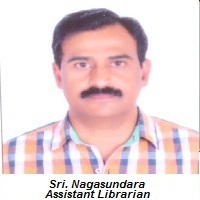
|
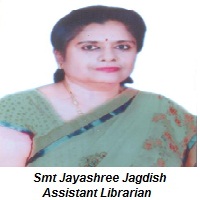
|
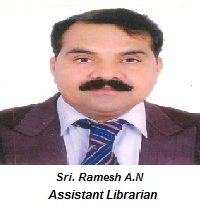
|
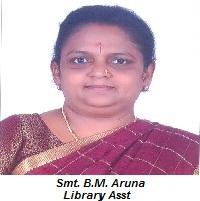
|
|
|
|
|
|
|
|
|
|
.png)
|
|
|
|
|
|
|
|
|
 (1)_page-0001.jpg)